
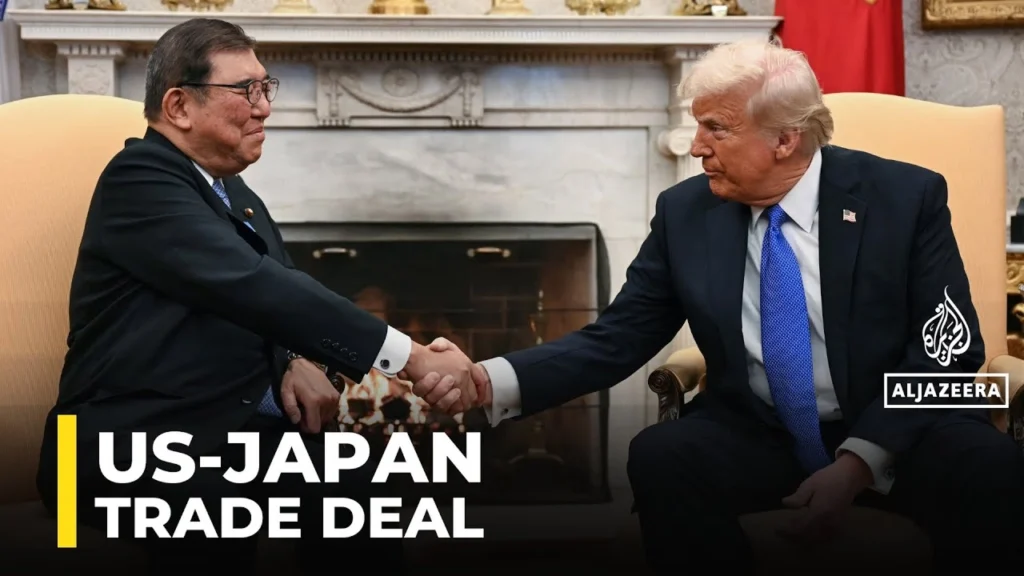
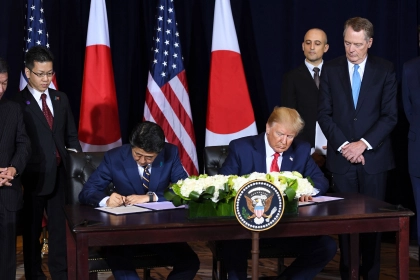
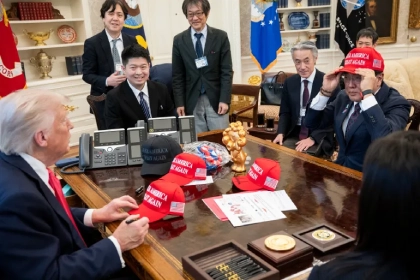
The US-Japan have finalized a major trade agreement that is already sending waves through global financial markets. The deal introduces a 15% tariff on select Japanese imports while paving the way for a record ”$550 billion” in Japanese investments into the U.S. economy.
What Does the US-Japan Trade Deal Include?
The agreement encompasses the following major components:
- 15% Tariff on Japanese Goods: Targeted primarily at industrial machinery, auto parts, and consumer electronics, these tariffs aim to protect key U.S. industries.
- $550 Billion Japanese Investment Commitment: Japan will inject substantial capital into American infrastructure, technology startups, clean energy, and financial markets.
- Technology & Defense Collaboration: The deal also outlines future cooperation on cybersecurity, semiconductor manufacturing, and AI development.
Why This Deal Matters for the Global Economy
The immediate reaction from global stock markets has been overwhelmingly positive. Here’s why this deal is significant:
- Boost to U.S. Stock Futures: Major U.S. indexes such as the Dow Jones and S &P 500 saw sharp upticks after the announcement.
- Stronger Bilateral Ties: The agreement strengthens economic and geopolitical ties between two of the world’s largest economies.
- Increased Investor Confidence: The massive influx of Japanese investment signals a bullish outlook on U.S. market stability and innovation.
Sector-Wise Impact
- Technology: U.S.-based tech firms are likely to benefit from collaborative research and development with Japanese firms.
- Manufacturing: Tariff protections may help revitalize U.S. industrial manufacturing.
- Infrastructure & Green Energy: With a portion of the $550B earmarked for sustainable infrastructure, the green tech sector is poised for significant growth.
Market Reaction & Forecast
Following the announcement:
- Asian Markets: The Nikkei surged by 2.3%, with investor optimism spilling over to other Asian markets.
- Wall Street: Dow Futures rose by over 300 points in pre-market trading.
- Forex: The yen weakened slightly against the U.S. dollar, reflecting expectations of increased Japanese capital outflows.
Final Thoughts
This landmark US–Japan trade agreement sets a new tone for global economic diplomacy. By combining trade restrictions with massive investment incentives, it aims to create a more balanced, cooperative, and growth-oriented global market.
As more details emerge, investors and policymakers alike will be closely watching the ripple effects this deal sends across sectors and borders.